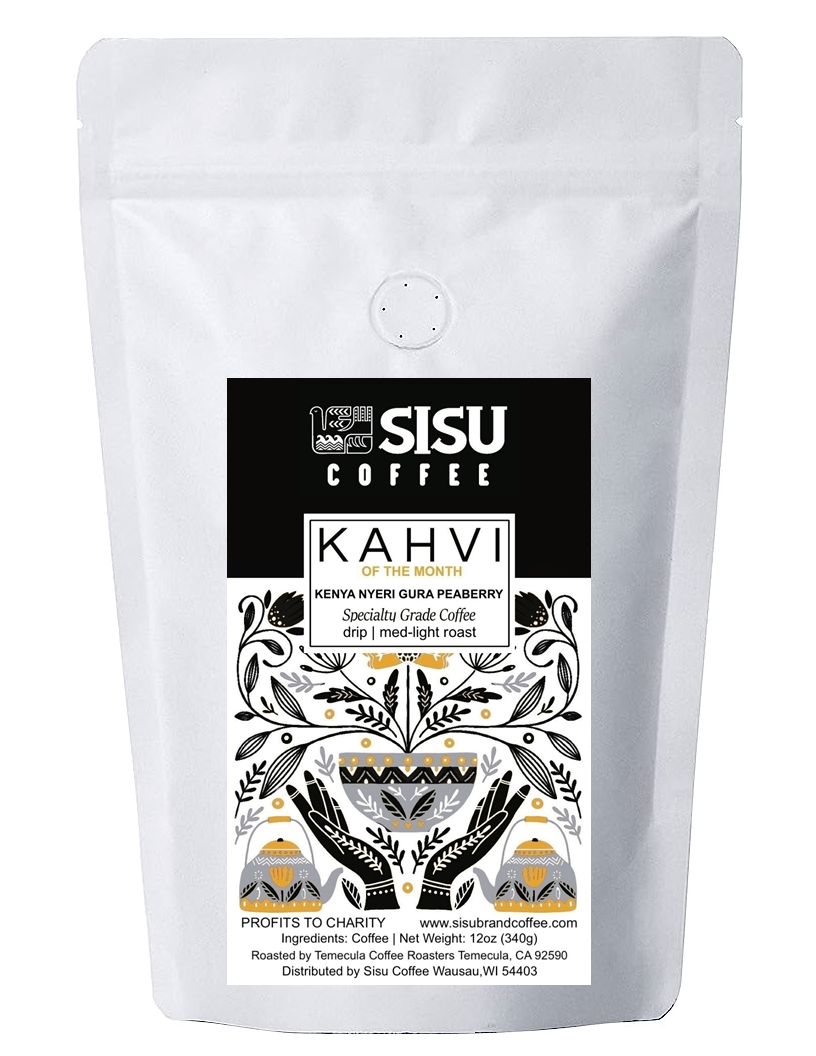


KAHVI of the Month | KENYA NYERI | MED-LIGHT | Kiwi, Mango & White Wine
KAHVI of the Month | KENYA NYERI | MED-LIGHT | Kiwi, Mango & White Wine
Couldn't load pickup availability
TRY A NEW COFFEE EVERY MONTH!
(Order at your leisure, or subscribe to enroll in KAHVI of the Month on auto-ship to never miss a great coffee!)
October Coffee of the Month: Kenya Nyeri Gura Peaberry
Roast Level: Medium/Light
Flavor Profile: Kiwi, mango, and white wine
Bright, fruit-forward and wonderfully complex, this exceptional peaberry comes from approximately 500 smallholder producers who deliver their coffee cherries to the Gura Factory in Kenya’s renowned Nyeri County.
The coffee is grown between 1,700 and 1,890 meters in mineral-rich volcanic soil. It brings together some of Kenya’s most respected coffee varieties: SL28, SL34, Ruiru 11 and Batian.
In the cup, juicy kiwi develops into ripe mango sweetness, followed a clean, white-wine-like brightness.
At the Gura Factory, freshly harvested coffee cherries are carefully fermented, washed, soaked and sorted by density before being slowly dried on raised beds for two to three weeks. This meticulous process creates the clarity, vibrant acidity and layered fruit character that make high-elevation Kenyan coffees so distinctive.
Peaberries form when a coffee cherry develops one small, rounded seed instead of the usual two flat-sided seeds. They are separated during sorting and prized for their concentrated, lively cup profile.
This is a memorable Coffee of the Month for customers who enjoy bright, expressive and fruit-forward specialty coffee.
Coffee Details
- Grower: Approximately 500 producers organized around the Gura Factory
- Region: Nyeri County, Kenya
- Altitude: 1,700–1,890 meters above sea level
- Varieties: SL28, SL34, Ruiru 11 and Batian
- Soil: Volcanic loam
- Process: Fully washed and dried on raised beds
- Certification: Conventional